
Redness & vessels · Myeongdong, Seoul
Broken capillaries Myeongdong Seoul: clearer, more even skin.
Fine red vessels on the cheeks and nose can often be faded with gentle laser energy and skin repair. A doctor at RE:BERRY Myeongdong, two minutes from Myeongdong Station Exit 8, checks the cause and plans treatment.
Medically reviewed by Dr. Seung-Jae Baek, Chief Medical Director (licence No. 143338) · Updated 8 October 2026
Quick answer · What is Broken Capillaries?
Broken capillaries, or telangiectasia, are small dilated blood vessels visible as fine red lines, usually on the cheeks and around the nose. Sun damage, rosacea and thin skin are common causes. RE:BERRY treats them with gentle laser energy, such as Genesis toning, that heats vessels so they fade, plus skin-strengthening boosters. Sessions take 15–30 minutes with little downtime; several sessions are usually needed, and new vessels can appear over time.
- Typical plan
- Laser every 3–4 weeks
- Session
- 15–30 min
- Downtime
- Mild redness for hours
- Results
- Gradual over 3–5 sessions
How it works
Gently closing visible vessels
Broken capillaries are widened vessels close to the surface, often in skin that has been thinned by sun or chronic redness. Laser light is absorbed by the blood in these vessels and gently heats them so they shrink and fade over the following weeks. Repair boosters thicken thin skin so vessels are less visible, and sun protection reduces new ones.
-
Diagnosis
Your doctor looks at the vessels under good light, checks for rosacea or other causes and advises whether a dedicated vascular laser or dermatology care would suit you better.
-
Laser treatment
Gentle laser energy is passed over the area with cooling, at settings matched to the size of the vessels and your skin type.
-
Follow-up
Vessels fade gradually over weeks; further sessions and daily sunscreen help maintain the result.
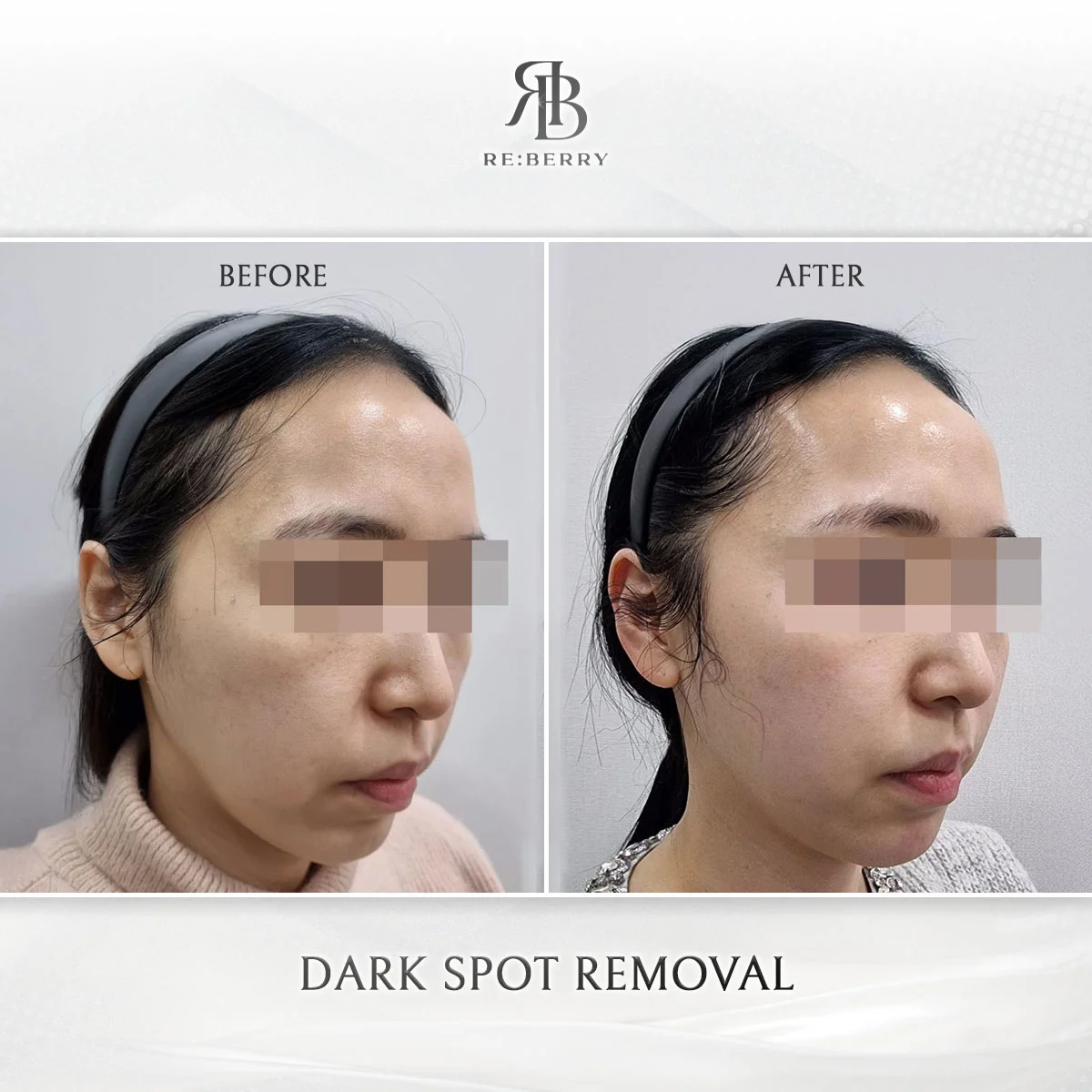
Before & after
Fewer visible red lines and a more even tone
Most patients see fine vessels fade gradually over a course, with calmer overall redness. Larger vessels may need more sessions, and new ones can form with time.
Photos published with patient consent. Results vary between individuals and are not a guarantee of outcome.
A good fit if you…
- Have fine red vessels on the cheeks, nose or chin
- Have redness linked to sun damage or rosacea
- Want improvement with little downtime
- Are prepared to use daily sun protection
Talk to your doctor first if you…
- Are pregnant or breastfeeding
- Have a recent tan or sunburn
- Take isotretinoin or photosensitising medication
- Have larger leg-type or bulging veins, which need a separate assessment
Compare options
Treatment options for broken capillaries compared
| Treatment | How it works | Session | Downtime |
|---|---|---|---|
| Genesis Toning | Non-ablative 1064 nm Nd:YAG warming | 15–30 min | Mild redness, hours |
| Laser Toning | Low-fluence 1064 nm laser toning | 15–20 min | None |
| Rejuran Healer | Polynucleotide (PN) injections | 45–60 min | Small bumps, 1–2 days |
| Exosome Therapy | Exosome growth-factor delivery | 40–60 min | Redness, hours to 1 day |
| LDM Treatment | Dual-frequency ultrasound micro-massage | 15–30 min | None |
Many patients combine treatments in one visit. Your doctor recommends a plan after examining your skin. See all skin concerns.
Your visit
From first message to flight home
-
Message us
Send your concern and travel dates on WhatsApp (+82-10-5719-2084), LINE or WeChat. A coordinator replies in English, Chinese, Japanese or Spanish.
-
Free doctor consultation
Skin analysis and photos, then a doctor confirms whether Broken capillary treatment suits you. You get the plan and price in writing first.
-
Same-day treatment
A capillary session takes about 15–30 minutes in a private room; mild redness usually settles within hours, so most patients continue their day. Written aftercare in your language, plus WhatsApp follow-up once you are home.
Who reviewed this page

Dr. Seung-Jae Baek
Chief Medical Director · Korean medical licence No. 143338
JUVELOOK Meister & Speaker and Revinas Key Opinion Leader. Member of the Aesthetic Surgery & Laser Society (ASLS Korea), the Korean Academy of Obesity & Aesthetic Treatment (KOAT) and the Korea Filler Education and Research Academy. RE:BERRY Myeongdong is a KHIDI-registered foreign patient medical institution (Reg. No. M-2025-01-08-8519).
FAQ
Broken Capillaries questions we hear every day
Can broken capillaries be removed permanently?
Treated vessels often fade well, but new ones can form with sun, heat or rosacea. Sun protection and occasional maintenance help keep skin clear.
Which treatment is best for broken capillaries?
Gentle vascular-targeted laser such as Genesis toning is a common choice for fine vessels and diffuse redness. Your doctor will advise if a different laser or dermatology referral would suit you better.
How many sessions will I need?
Most patients need three to five sessions three to four weeks apart, depending on how many vessels there are and how large they are.
Is there downtime?
Usually only mild redness or warmth for a few hours. Small bruising is uncommon with gentle settings.
Can I sightsee or fly home after treatment?
Yes. You can go out straight away and fly the next day. Avoid saunas, hot baths, alcohol and strong sun for a day or two.
How much does broken capillary treatment cost in Myeongdong?
Price depends on the area and number of sessions. The same price list applies to every nationality and is given to you in writing before treatment. See our pico toning and acne price list.
Bothered by broken capillaries? Ask a doctor first.
58, Myeongdong 10-gil, Jung-gu, Seoul · 2 min from Myeongdong Station Exit 8 · Open daily, weekdays 10:30–20:00, weekends 10:30–19:00.
General information, not medical advice. Suitability for any treatment is decided at consultation.