
Laser mole removal · Myeongdong, Seoul
Mole removal Myeongdong Seoul: a quick procedure, careful healing.
Doctor-assessed removal of small benign moles and skin growths using CO2 laser or radiofrequency, followed by protective patches while the skin heals. Performed by licensed physicians at RE:BERRY Myeongdong, two minutes from Myeongdong Station Exit 8, with consultations in your language.
Medically reviewed by Dr. Seung-Jae Baek, Chief Medical Director (licence No. 143338) · Updated 8 October 2026
Quick answer · What is Mole Removal?
Laser mole removal uses a CO2 laser or radiofrequency device to remove small, benign-looking moles layer by layer under local numbing. The doctor first checks each mole, and anything suspicious is referred for proper examination rather than lasered. The procedure takes about 5–20 minutes depending on the number of moles. Small wounds heal over about 7–10 days under hydrocolloid patches, and deeper moles occasionally need a touch-up.
- Session
- 5–20 min
- Downtime
- 7–10 days with patches
- Results
- After healing
- Repeat
- Touch-up if needed
How it works
Precise removal, then protected healing
The CO2 laser vaporises mole tissue in very thin layers, letting your doctor stop once the pigment is gone and limit damage to surrounding skin. Raised moles can be shaved down with radiofrequency. Keeping the wound moist and covered under hydrocolloid patches helps it heal smoothly.
-
Mole check
Your doctor examines each mole. Any that look irregular or have changed are not lasered and are referred for further assessment.
-
Numbing and removal
After numbing, the laser or radiofrequency device removes the mole layer by layer, usually in seconds to minutes.
-
Patch and heal
A hydrocolloid patch covers each site. Wear patches for about 7–10 days, then protect the new skin from sun.
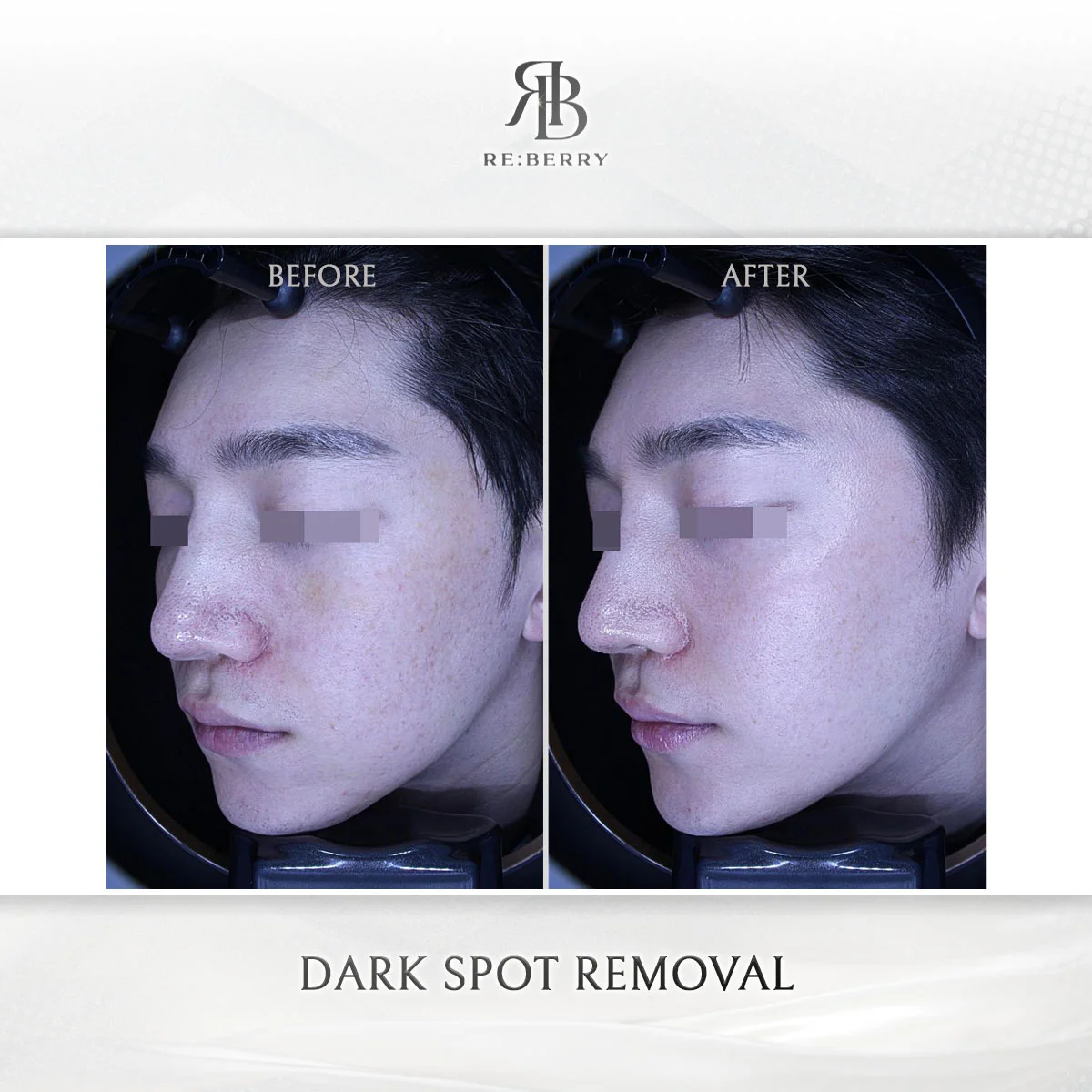
Before & after
A smoother skin surface once healed
After healing, most treated sites appear as a small pink or flat mark that fades over weeks to months. Deeper moles can leave a slight mark or need a second session.
Photos published with patient consent. Results vary between individuals and are not a guarantee of outcome.
A good fit if you…
- Have small, benign-looking flat or raised moles
- Have skin tags or small growths that catch on clothing or jewellery
- Want several small spots removed in one visit
- Can wear small patches and avoid sun on the area while it heals
Talk to your doctor first if you…
- Have a mole that has changed in size, shape or colour, or bleeds
- Are pregnant or breastfeeding
- Have a tendency to keloid or raised scarring
- Take blood thinners or have an active infection in the area
Compare options
How Mole Removal compares with similar treatments
| Treatment | How it works | Session | Downtime |
|---|---|---|---|
| Mole Removal | CO2 laser or RF removal | 5–20 min | 7–10 days with patches |
| CO2 Laser | Ablative 10,600 nm laser | 10–45 min | 3–7 days |
| Laser Pigmentation Treatment | Pico or Q-switched pigment laser | 15–30 min | None to mild redness |
| Lip Pigmentation Treatment | Low-energy laser on the lips | 20–30 min | None to mild redness |
| Laser Toning | Low-fluence 1064 nm laser toning | 15–20 min | None |
Many patients combine treatments in one visit. Your doctor recommends a plan after examining your skin. See all skin concerns.
Your visit
From first message to flight home
-
Message us
Send your concern and travel dates on WhatsApp (+82-10-5719-2084), LINE or WeChat. A coordinator replies in English, Chinese, Japanese or Spanish.
-
Free doctor consultation
Skin analysis and photos, then a doctor confirms whether mole removal suits you. You get the plan and price in writing first.
-
Same-day treatment
Mole removal takes 5–20 minutes in a private room; you leave with small patches on and can continue your day, but plan to wear patches for about a week. Written aftercare in your language, plus WhatsApp follow-up once you are home.
Who reviewed this page

Dr. Seung-Jae Baek
Chief Medical Director · Korean medical licence No. 143338
JUVELOOK Meister & Speaker and Revinas Key Opinion Leader. Member of the Aesthetic Surgery & Laser Society (ASLS Korea), the Korean Academy of Obesity & Aesthetic Treatment (KOAT) and the Korea Filler Education and Research Academy. RE:BERRY Myeongdong is a KHIDI-registered foreign patient medical institution (Reg. No. M-2025-01-08-8519).
FAQ
Mole Removal questions we hear every day
Does mole removal hurt?
Numbing cream or a small local anaesthetic injection is used first, so most people feel only slight warmth or pressure.
Will mole removal leave a scar?
Small moles usually heal to a faint mark that fades over time. Deeper or larger moles carry a higher chance of a visible mark, and your doctor will explain this beforehand.
How long does healing take?
Most sites close in about 7 to 10 days under hydrocolloid patches. The new skin may stay pink for several weeks, so sun protection is important.
Can the mole come back?
Some deeper moles can return if pigment cells remain. A touch-up session may be needed after the skin has fully healed.
Can every mole be removed with laser?
No. Moles that look irregular or have changed should be examined, and may need a biopsy, rather than being lasered. Learn more about the device on our CO2 laser page.
How much does mole removal cost in Myeongdong?
Pricing depends on the number and size of moles treated. The same price list applies to every nationality and you receive it in writing before treatment. See our laser price list.
Related treatments & guides
Thinking about mole removal? Ask a doctor first.
58, Myeongdong 10-gil, Jung-gu, Seoul · 2 min from Myeongdong Station Exit 8 · Open daily, weekdays 10:30–20:00, weekends 10:30–19:00.
General information, not medical advice. Suitability for any treatment is decided at consultation.