
Dark patches · Myeongdong, Seoul
Dark patches Myeongdong Seoul: find the cause, lighten them gently.
Dark patches are usually melasma or pigment left after inflammation, and both respond best to gentle, repeated treatment. A doctor confirms the cause first at RE:BERRY Myeongdong, two minutes from Myeongdong Station Exit 8.
Medically reviewed by Dr. Seung-Jae Baek, Chief Medical Director (licence No. 143338) · Updated 8 October 2026
Quick answer · What is Dark Patches?
Dark patches are larger areas of darker skin, most often caused by melasma, pigment left after acne or irritation, or sun damage. Patches on the neck or skin folds may need medical checking. At RE:BERRY Clinic facial patches are treated with low-energy laser toning, often with brightening care and strict sun protection. Sessions take about 20–30 minutes with no downtime, and most patients need 5–10 sessions spaced 1–2 weeks apart.
- Typical plan
- Toning every 1–2 weeks
- Session
- 20–30 min
- Downtime
- None to mild redness
- Results
- Gradual over 5–10 sessions
How it works
Gentle treatment for reactive pigment
Patchy pigment such as melasma and post-inflammatory marks is easily triggered by heat, sun and irritation. Low-energy toning breaks down excess melanin gradually without inflaming the skin, and brightening care supports an even tone. Where a patch may relate to hormones or another medical cause, your doctor advises further assessment.
-
Diagnosis
Your doctor examines the patches, asks about hormones, medication and skin history, and refers on if a medical cause is suspected.
-
Gentle toning
Low-energy laser toning is applied across the patches, with brightening care or Genesis toning added where suitable.
-
Follow-up & maintenance
Patches lighten gradually; sunscreen and maintenance help prevent them darkening again.
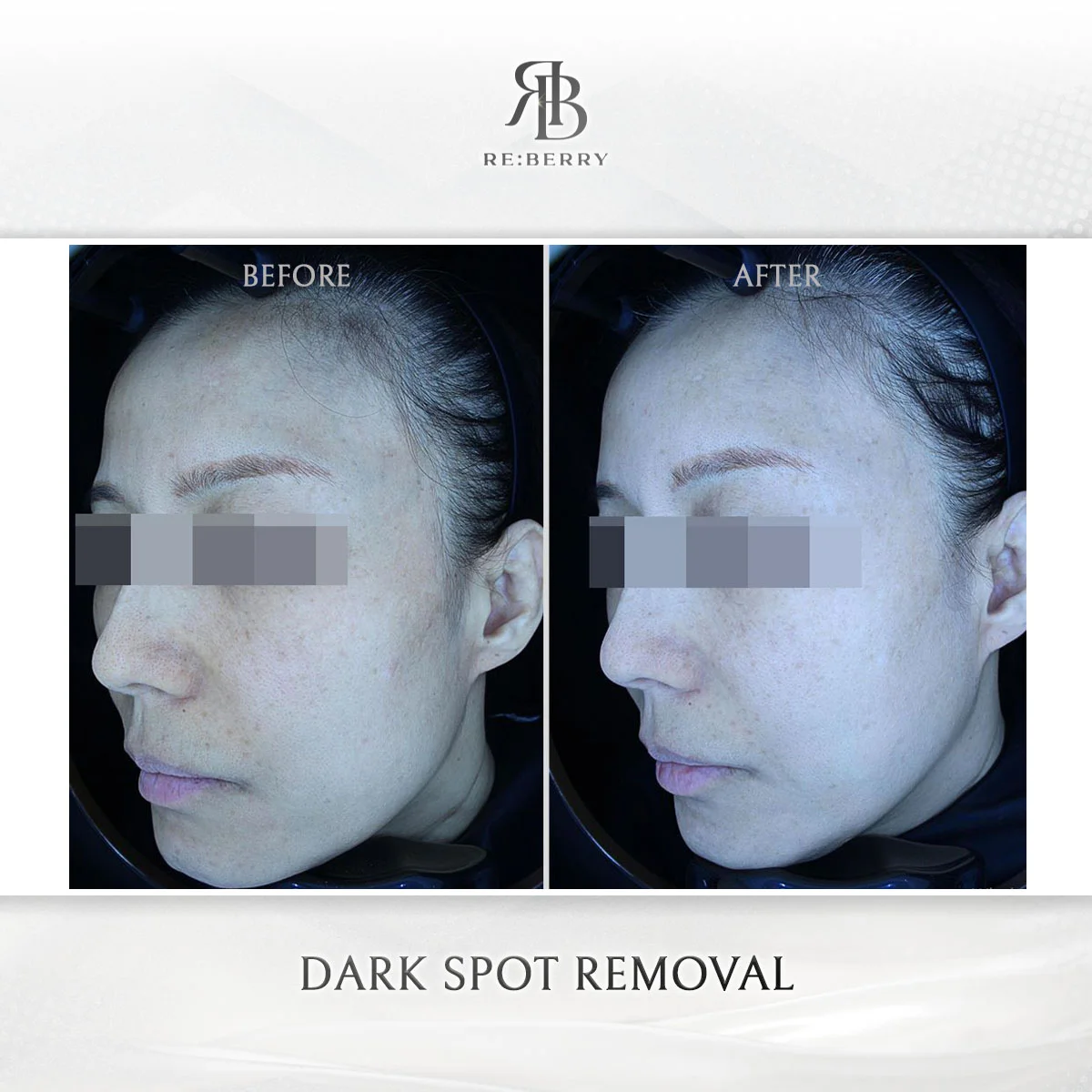
Before & after
Lighter, softer-edged patches
Most patients see patches become lighter and blend better with the surrounding skin over a course. Hormonal patches such as melasma may return, so maintenance is often needed.
Photos published with patient consent. Results vary between individuals and are not a guarantee of outcome.
A good fit if you…
- Have brown patches on the cheeks, forehead or jawline
- Have darker areas left after acne or irritation
- Want gradual improvement with no downtime
- Can attend repeat sessions and use daily sunscreen
Talk to your doctor first if you…
- Are pregnant or breastfeeding
- Take isotretinoin or photosensitising medication
- Have velvety dark patches on the neck or skin folds that have not been medically checked
- Have recently tanned, sunburnt or irritated skin
Compare options
Treatment options for dark patches compared
| Treatment | How it works | Session | Downtime |
|---|---|---|---|
| Laser Toning | Low-fluence 1064 nm laser toning | 15–20 min | None |
| Hyperpigmentation Treatment | Toning, IPL and brightening care | 30–45 min | None to minimal |
| Genesis Toning | Non-ablative 1064 nm Nd:YAG warming | 15–30 min | Mild redness, hours |
| Laser Pigmentation Treatment | Pico or Q-switched pigment laser | 15–30 min | None to mild redness |
| Skin Brightening Treatment | Laser toning plus hydrating boosters | 30–45 min | None |
Many patients combine treatments in one visit. Your doctor recommends a plan after examining your skin. See all skin concerns.
Your visit
From first message to flight home
-
Message us
Send your concern and travel dates on WhatsApp (+82-10-5719-2084), LINE or WeChat. A coordinator replies in English, Chinese, Japanese or Spanish.
-
Free doctor consultation
Skin analysis and photos, then a doctor confirms whether Dark patch treatment suits you. You get the plan and price in writing first.
-
Same-day treatment
A dark patch toning session takes about 20–30 minutes in a private room, and you can go straight back out with sunscreen on. Written aftercare in your language, plus WhatsApp follow-up once you are home.
Who reviewed this page

Dr. Seung-Jae Baek
Chief Medical Director · Korean medical licence No. 143338
JUVELOOK Meister & Speaker and Revinas Key Opinion Leader. Member of the Aesthetic Surgery & Laser Society (ASLS Korea), the Korean Academy of Obesity & Aesthetic Treatment (KOAT) and the Korea Filler Education and Research Academy. RE:BERRY Myeongdong is a KHIDI-registered foreign patient medical institution (Reg. No. M-2025-01-08-8519).
FAQ
Dark Patches questions we hear every day
What causes dark patches on the face?
The most common causes are melasma, pigment left after acne or irritation, and sun damage. A doctor identifies the cause, as each responds differently.
Can dark patches be removed permanently?
Post-inflammatory patches often fade well. Melasma-type patches can be lightened and controlled but may return with sun, heat or hormonal change.
Which treatment is best for dark patches?
Gentle laser toning is the usual first choice, often with brightening care. Some patients also benefit from prescription creams advised by a doctor.
How many sessions are needed?
Most patients need 5 to 10 sessions spaced 1 to 2 weeks apart, followed by maintenance depending on the cause.
Is there downtime, and can I sightsee afterwards?
Usually there is no downtime and makeup can be worn the same day. Sightseeing is fine with sunscreen, a hat and shade.
How much does dark patch treatment cost in Myeongdong?
Pricing depends on the treatments combined, the area treated and the number of sessions. The same price list applies to every nationality and you receive it in writing before treatment. See our pico, toning and acne price list.
Related treatments & guides
Thinking about dark patch treatment? Ask a doctor first.
58, Myeongdong 10-gil, Jung-gu, Seoul · 2 min from Myeongdong Station Exit 8 · Open daily, weekdays 10:30–20:00, weekends 10:30–19:00.
General information, not medical advice. Suitability for any treatment is decided at consultation.